
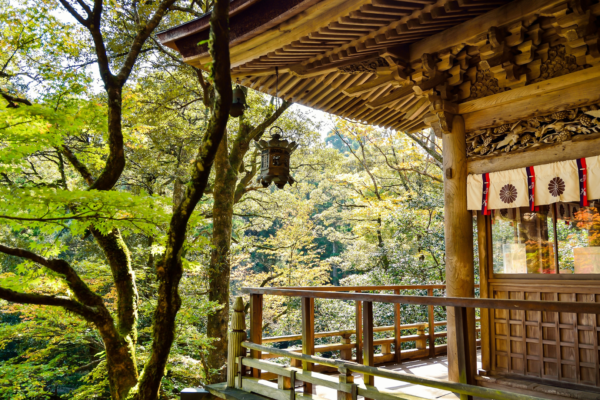
Japan is a country steeped in rich cultural traditions that reflect a commitment to living in harmony with nature and embracing healthy lifestyle habits. Japan is largely mountainous and forested, encouraging outdoor activities like hiking and mushroom foraging, and the surrounding ocean provides ample access to beaches and water activities. Moreover, Japan’s ancient wellness traditions remain strong today, including its Onsen culture (natural hot springs that are a quintessential part of wellness), nationwide respect for hygienic living and cleanliness, ingrained attitudes towards healthy food, and a Zen mindset that influences activities from mindfulness to martial arts.
Forest Bathing and the Zen Philosophy of Daily Life
When the Japanese government coined the term “Forest Bathing” in the early 1980s (a translation of “shinrin-yoku” or taking in the forest), the world rediscovered Japan’s vast wellness resources and its Zen philosophy towards living. Ceremonies like Kado (flower arrangement) and Sado (tea ceremony) originate in Zen, and visitors are encouraged to step back and appreciate both the moment and the act itself. The concept of what makes a life worth living – ikigai – along with a lifestyle of healthy eating, natural physical activity, and social connections, has been credited with the longevity of centenarians in Okinawa, Japan’s Blue Zone.
Everyday Movement and Functional Fitness in Japan
Fitness in Japan is not as gym-focused as it is in many Western countries. Rather, the Japanese people tend to incorporate functional fitness into their every day lives; walking or cycling as means of commuting is commonplace, walking moais – small groups of 5-10 people who meet weekly to walk and socialize – originated in Okinawa, and “Radio Taiso” – a short, guided stretching routine that has been broadcast daily in Japan since the 1920’s – is accessible to all ages and fitness levels.
Mindful Eating and Mealtime Culture in Japan
The Japanese diet is widely considered one of the healthiest in the world, with even fast-food restaurants offering nutrient-dense, healthy meals. With an emphasis on seasonal, fresh ingredients, popular Japanese staples include fresh fish, vegetables, noodle soups, soy and other fermented foods, and miso. Japanese cuisine strives to balance the five flavors: sweet, sour, salty, bitter, and savory. In addition, while highly processed foods are available, they are not widely consumed, and even desserts use subtle sweetness rather than bold, artificial sugars.
Japanese meals are typically eaten with family – rather than alone at a desk! – with an emphasis on respect and appreciation. It is, in fact, considered a sign of appreciation to slurp your soup! Many westerners struggle with the Japanese 80% rule (hara hachi bun me), a mindful eating practice to stop eating when you are about 80% full rather than stuffed. As a result of this practice of moderate eating and natural, daily movement, obesity is not a pervasive problem in Japan, with the obesity rate sitting around 3.6% – one of the lowest in the world.
For more DLS, check out other blogs and visit us on LinkedIn, YouTube, Facebook, and Instagram!